| MISSION |
The SCOOP was designed with several goals in mind. The primary goal behind the development and installation of the station is to detect and investigate harmful algal blooms (HABS) and red tides. The station will aid researchers in monitoring the presence, distribution, abundance and population dynamics of HAB and red tide forming species. Monitoring such features of bloom-forming phytoplankton species as well as the oceanographic conditions related to bloom formation is an essential step towards prediction of HABs and red tides, which ultimately impact human health, wildlife, and fisheries.
Additionally, the pier-based station provides researchers with a platform where emerging technologies and instrumentation can be tested. New tools are routinely developed that can allow for enhanced ecosystem research and resource management, and the station serves as a trial for new instruments. This station is considered a prototype – its success could lead to the development of a cost-effective model for possible adaptation and deployment by organizations in other regions.
|
|
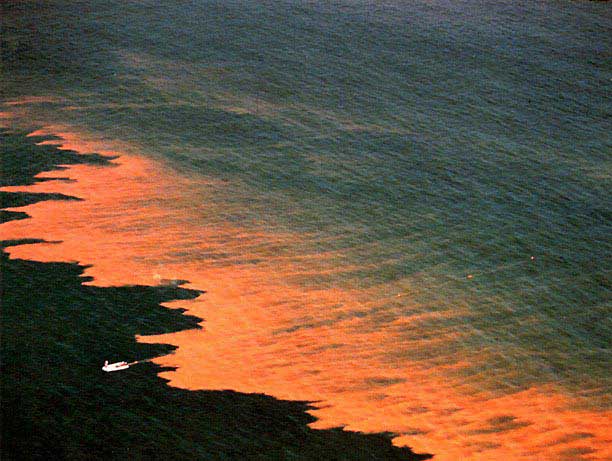
If only detection were this easy! Harmful algal blooms are frequently colorless, and red tides can be harmless. Monitoring is critical to bloom prediction, detection, and management. |