 |
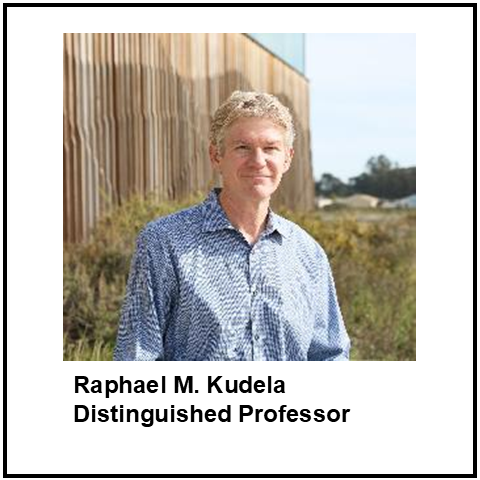
Raphael is a phytoplankton ecologist who wishes to understand the fundamental question: what controls phytoplankton growth and distribution in the ocean? More specifically, how do the multiple interactions of light, macro- and micronutrients and phytoplankton physiology determine the rates, processes, and patterns we observe in the marine environment? |
 |
Kendra is interested in the application of molecular tools and techniques to better understand harmful algal bloom ecology and toxicity. Her Masters thesis focused on developing a QPCR method to indentify Pseudo-nitzchia species at the Monterey Wharf. She’s become more involved with algal toxin analysis since joining the Kudela Lab and her current projects include monitoring at the Santa Cruz Wharf and SCOOP. |
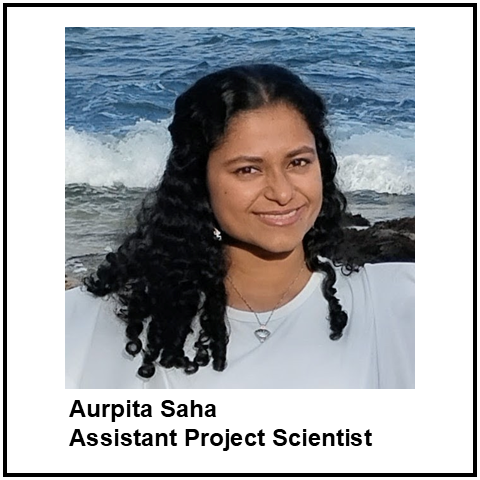 |
Aurpita investigates the drivers, predictability, and future evolution of harmful algal blooms in coastal and estuarine ecosystems. Her work combines physical–biogeochemical ocean modelling, statistical and machine-learning approaches, remote sensing, and observational data to understand how climate variability and environmental change influence marine ecosystems. Her interests also span tropical cyclones, ocean circulation, barrier layers, and freshwater influences on the ocean, building on postdoctoral work at NOAA/AOML, PhD research at the University of Hamburg, Germany, and MSc research at IIT Bhubaneswar, India. |
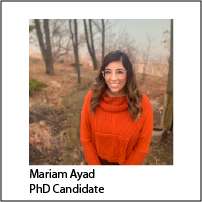 |
Mariam is a PhD student at the University of California, Santa Cruz at the Ocean Science Department. She graduated from the California State University of Los Angeles with an M.S. in Environmental Science and from the University of California Irvine with a B.S. in Earth System Science. She has been an intern at the NASA Jet Propulsion Laboratory since June 2019. Mariam's research interests are utilizing remote sensing and machine learning to identify and classify marine pollution and coral bleaching. |
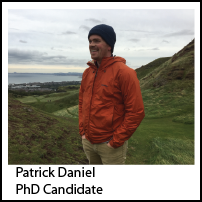 |
Patrick is a Ph.D. student in the Ocean Sciences department. His research is in understanding the physical and ecological drivers of variability in phytoplankton abundance and community structure. Before starting at UCSC, Patrick worked at the Monterey Bay Aquarium Research Institute for the CeNCOOS program as an oceanographic data manager. He completed an M.S. in Marine Science in the Physical Oceanography Lab at Moss Landing Marine Labs and a B.S. in Biology from the University of San Francisco. |
 |
Marco is a PhD student in the Ocean Science Department. His interests lie in microscopy and toxins produced during harmful algae blooms along the California Current. Currently he is working on updating a domoic acid forecasting model in the Pacific Northwest. He graduated from UC Santa Cruz with a B.S. in Environmental Sciences. Additionally Marco enjoys volunteering for Surfrider Foundation, regularly testing Enterococcus concentrations around Santa Cruz County beaches. |
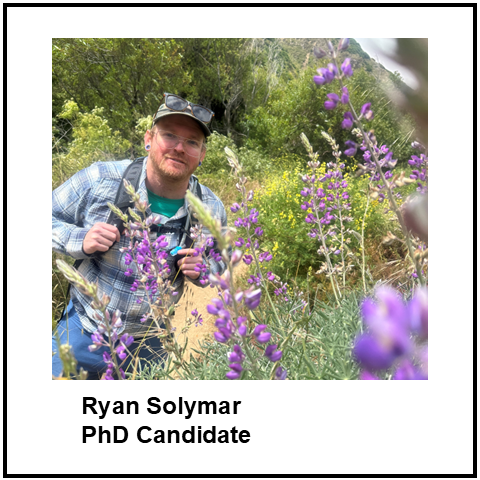 |
Ryan is a Ph.D. student in the Ocean Sciences department. His research interests are currently centered around understanding the behavior and availability of light in the ocean, especially as it informs: (1) remote sensing of ocean color and (2) the effect of light quality (color) on phytoplankton dynamics. He completed an M.S. in Environmental Science and a B.S. in Marine Science both at CSU Monterey Bay. |
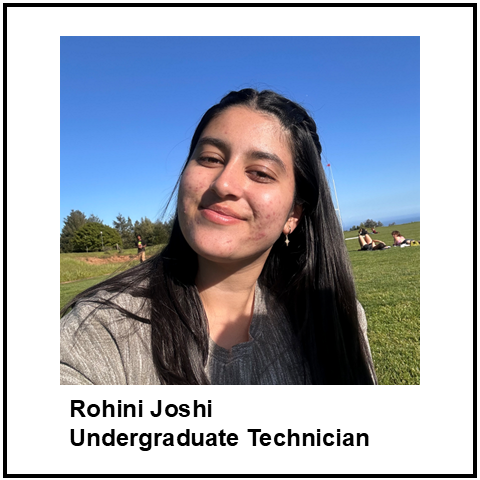 |
Rohini Joshi is a Microbiology undergraduate who joined the lab in 2024. She is currently interested in trophic cascade, phytoplankton dynamics ex-situ, and the binding of Domoic Acid in animal tissue. Rohini is excited to help with all of the lab's research and her future journey into academia! |
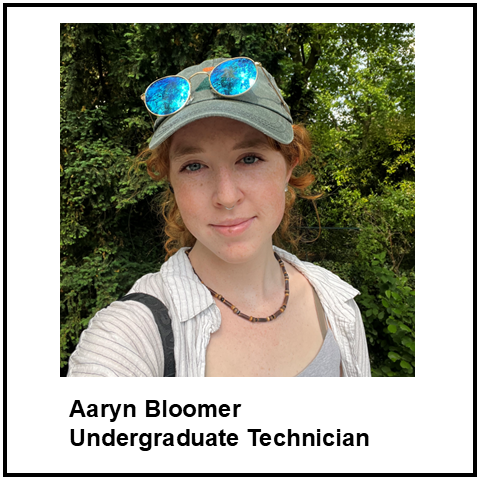 |
Aaryn is an EEB Biology undergraduate who's been volunteering with the Kudela Lab since 2025. She is currently interested in the ecological impacts of harmful algal blooms, mainly Pseudo-nitzschia. Aaryn is looking forward to helping out with the lab's future research!
|
--- --
--
--